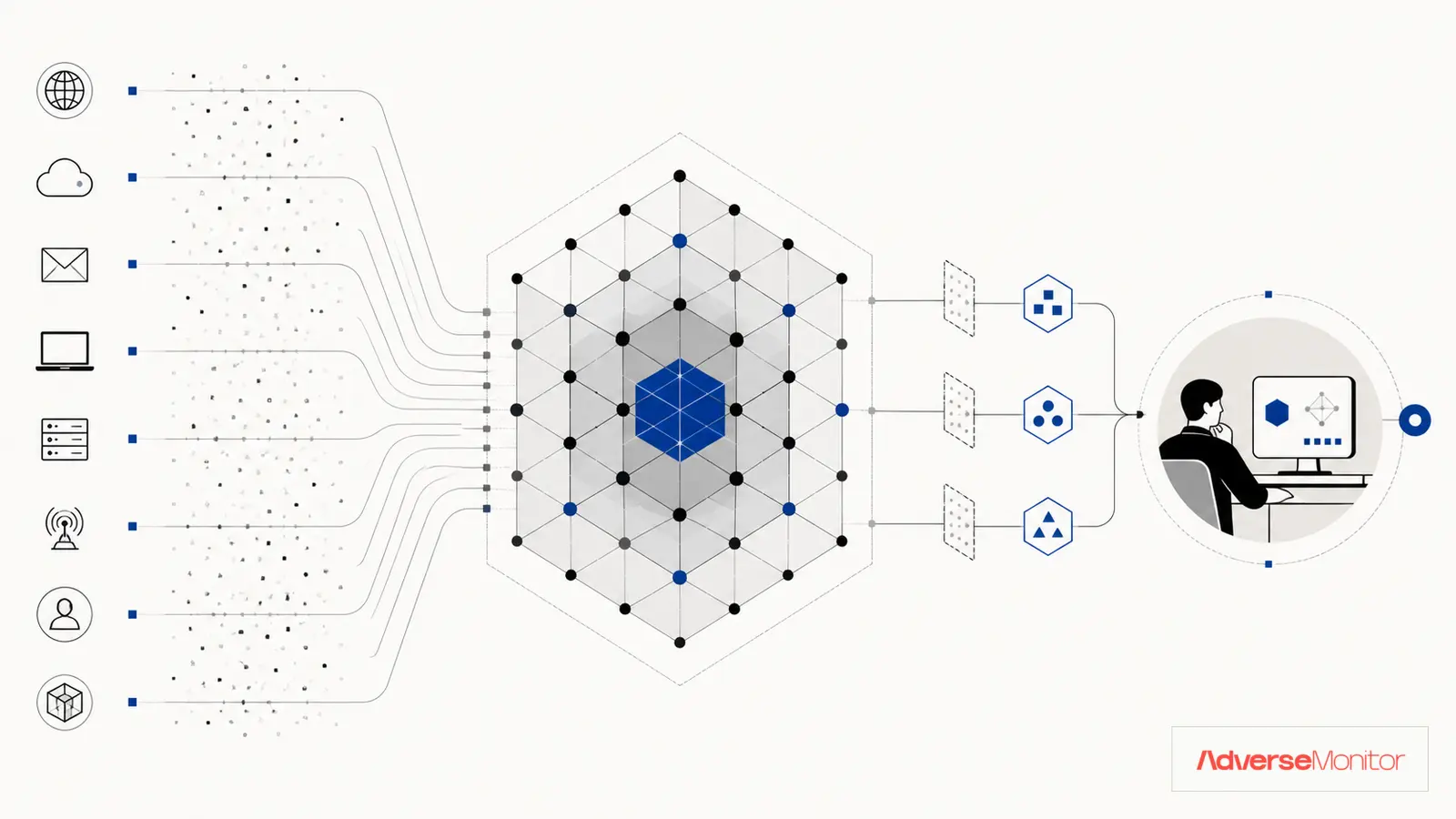
Security systems produce more events than an analyst can inspect by hand. Machine-learning models help filter that volume, but the team still decides what counts as an incident and what action is safe.
Security products use machine learning for classification, anomaly detection, language processing, and triage. The useful question is which task the model performs, which data it sees, and how a person checks its output.
The Evolution of AI in Cybersecurity
The Signature Era (1990s-2000s)
Traditional security tools relied on signatures, which describe known patterns of malicious behavior. Antivirus software maintained malware signatures, firewalls blocked known-bad IP addresses, and IDS systems matched traffic against attack patterns.
Attackers could modify a tool to evade an exact signature. Defenders then had to publish another signature for the changed sample.
The Heuristic Era (2010s)
Security tools added heuristics, or rules that identify suspicious behavior instead of exact matches. Those rules can catch changed samples, though broad rules also generate false positives.
The AI Era (2020s)
Some current systems model normal activity and flag deviations. Model quality depends on training data, feature design, thresholds, and feedback; processing more data does not guarantee improvement.
Test each model against your own workflow. Record which alerts analysts confirm, which threats the model misses, and how much review work it adds.
How AI Transforms Threat Detection
1. Behavioral Analysis at Scale
A model can calculate behavioral baselines across users, devices, and applications at a volume that analysts cannot review record by record.
A login outside a user's normal hours and location may warrant review. So may a sudden rise in API traffic or a change in network behavior. The model can surface those deviations, while an analyst checks whether the surrounding activity supports an incident finding.
2. Natural Language Processing for Threat Intelligence
Dark web forums, hacker channels, and underground marketplaces generate enormous amounts of text data in multiple languages. AI-powered NLP can:
- Monitor Telegram channels and Discord servers at scale
- Translate and analyze Russian, Chinese, and other language forums
- Identify discussions about specific organizations or vulnerabilities
- Extract structured threat intelligence from unstructured text
- Detect new attack techniques being discussed before they're deployed
3. Automated Malware Analysis
Reverse engineers need enough time and evidence to understand a malware sample. Models can support that work by:
- Suggesting a malware family for analyst review
- Identify code reuse across different samples
- Predict malware behavior without execution
- Detect subtle indicators that human analysts might miss
- Sorting large sample queues for deeper analysis
4. Phishing Detection
Phishing messages vary in language, sender behavior, links, and attachments. Models can add signals such as:
- Analyzing writing style to detect impersonation
- Evaluating sender reputation and behavior patterns
- Examining URLs and attachments for malicious indicators
- Understanding context to identify social engineering attempts
Email filtering combines automation with investigation. A model can rank suspicious messages, but the security team still needs a route for reviewing false positives and high-impact alerts.
AI in Dark Web Monitoring
Dark web monitoring presents unique challenges that make it ideal for AI enhancement.
The Scale Problem
Forums, marketplaces, paste sites, and selected messaging channels publish more records than an analyst team can review one by one.
The Language Problem
Cybercriminals communicate in Russian, Chinese, Portuguese, Arabic, and dozens of other languages. Many use slang, code words, and intentional obfuscation. Traditional keyword matching fails.
The Context Problem
A mention of "Company X credentials" could advertise stolen data or ask whether anyone has seen such data for sale. A classifier can rank the record, but an analyst needs to read the source before treating it as evidence.
How AI Solves These
- Automated collection: AI systems continuously crawl and index dark web content
- Semantic matching: NLP models can group related text beyond exact keyword matches
- Entity extraction: AI identifies company names, email domains, and other relevant entities
- Prioritization: ML models rank alerts by relevance and severity
- Pattern recognition: AI identifies threat actors and tracks their activities across platforms
The Current State: What AI Can and Cannot Do
What AI Does Well
- Anomaly detection: Identifying deviations from normal behavior
- Pattern matching at scale: Processing volumes humans cannot handle
- Correlation: Connecting related events across data sources
- Triage: Prioritizing alerts for human review
- Automation: Supporting routine response steps under defined policy
What AI Struggles With
- Novel attacks: AI trained on historical data may miss genuinely new techniques
- Context understanding: Business context often requires human judgment
- Adversarial inputs: Attackers can craft inputs designed to fool AI systems
- Explanation: Many AI systems can't explain why they flagged something
- False positives: AI still generates noise that requires human review
Keep confirmation and high-impact response decisions with named people. Measure whether model-assisted triage reduces review work without hiding missed detections.
Implementing AI-Powered Security
Start With High-Volume, Low-Risk Tasks
Begin with work that produces enough review data and does not give the model authority over high-impact actions:
- Email filtering and phishing detection
- Log analysis and anomaly detection
- Threat intelligence processing
- Vulnerability prioritization
Invest in Data Quality
AI is only as good as its training data. Before deploying AI tools:
- Ensure logging is comprehensive and consistent
- Clean and normalize historical data
- Establish data governance practices
- Plan for ongoing data quality maintenance
Keep Humans in the Loop
Use models for initial detection and triage. Keep a person responsible for high-impact decisions:
- AI flags potential threats → Human reviews and confirms
- AI suggests response actions → Human approves or modifies
- AI automates routine responses → Human handles exceptions
Plan for Adversarial AI
As defenders adopt AI, attackers develop techniques to evade it:
- Adversarial examples designed to fool classifiers
- Slow attacks that don't trigger anomaly detection
- Mimicry attacks that blend with normal behavior
Use independent controls alongside model-based detection.
Likely Development Areas
Autonomous Response
Vendors are adding automated response actions such as isolating a compromised system or blocking traffic. Teams need approval rules, rollback paths, and logs before allowing a model to take those actions.
Predictive Security
Predictive systems aim to rank likely targets, exploitable vulnerabilities, and developing campaigns. Those forecasts need calibration against later outcomes.
AI-to-AI Combat
Attackers can use models to vary content or probe controls, while defenders use models to classify the resulting activity. Both sides still depend on access, data, and operational choices made by people.
Democratized Security
AI will make sophisticated security capabilities accessible to smaller organizations. Tools that once required large security teams will become available as AI-powered services.
AI-Powered Dark Web Monitoring
AdverseMonitor tracks publicly posted cyber-incident claims from ransomware and extortion leak sites, data-breach and data-leak listings, DDoS, defacement, and initial-access offers. Sources include Telegram channels, Tor sites, and the open web. The dashboard records a match when a monitored organisation, domain, industry, or country is named.
Check a DomainKey Takeaways
- Models can classify and rank more events than analysts can review one by one
- Analysts provide business context and approve high-impact actions
- Start with high-volume, lower-risk use cases and expand as you build confidence and capability
- Training data, thresholds, and feedback affect model quality
- Attackers can design inputs to evade model-based defenses
Assign each model a narrow task, measure its misses and false positives, and keep a person accountable for the response. That operating model matters more than an "AI-powered" label.