Dark web monitoring checks selected sources for terms tied to an organization, such as a domain or company name. A match is a lead for investigation, not proof that an incident occurred.
This guide explains the sources a provider may collect, how matching works, and what an analyst should verify after a result appears.
Understanding the Dark Web
The dark web includes services that are not indexed like ordinary websites and require software such as Tor to reach. Tor onion services use .onion addresses and conceal the service's network location from ordinary browsing.
Criminal activity found on these services can include:
- Selling stolen data and credentials
- Trading hacking tools and malware
- Publishing ransomware victim information
- Coordinating cyberattacks
- Auctioning network access to compromised organizations
Industry Insight:
Investigation and response time matter, but a public average does not prove that one monitoring tool creates a particular saving. Measure collection, verification, containment, and recovery in your own environment.
What Is Dark Web Monitoring?
Dark web monitoring is a cybersecurity service that continuously scans hidden websites, hacker forums, encrypted messaging channels, and underground marketplaces for mentions of your organization, domains, employees, or sensitive data.
The workflow resembles a saved search: the provider collects a source record, compares it with configured terms, and surfaces a match for review. Collection timing and source reliability vary, so an analyst still needs to verify the result.
What Sources Does Dark Web Monitoring Cover?
A provider may collect several source types. Ask which sources it covers and how often each one is checked.
Ransomware Leak Sites: Ransomware groups publish victim names or stolen material on dedicated leak sites. A collected listing can show when a named organization appeared, but collection latency and name collisions must be checked before escalation.
Hacker Forums: Underground forums like XSS, Exploit.in, and BreachForums are where cybercriminals discuss techniques, sell exploits, and advertise stolen databases. These communities often contain early indicators of targeting or compromise.
Telegram Channels: Telegram is not part of the dark web, but some providers include selected public channels in a broader external-threat feed. Coverage depends on the provider's source list.
Paste Sites: Attackers frequently use sites like Pastebin to dump stolen credentials or proof-of-compromise data. These are often early indicators that a breach has occurred.
Credential Marketplaces: Specialized marketplaces sell stolen username/password combinations, often organized by company or industry. If your employees' credentials appear here, attackers may soon attempt to use them.
Initial Access Brokers: These specialized cybercriminals sell network access to compromised organizations. If your company appears in these listings, it means someone has already gained access to your systems and is selling that access to other attackers.
How Does Dark Web Monitoring Work?
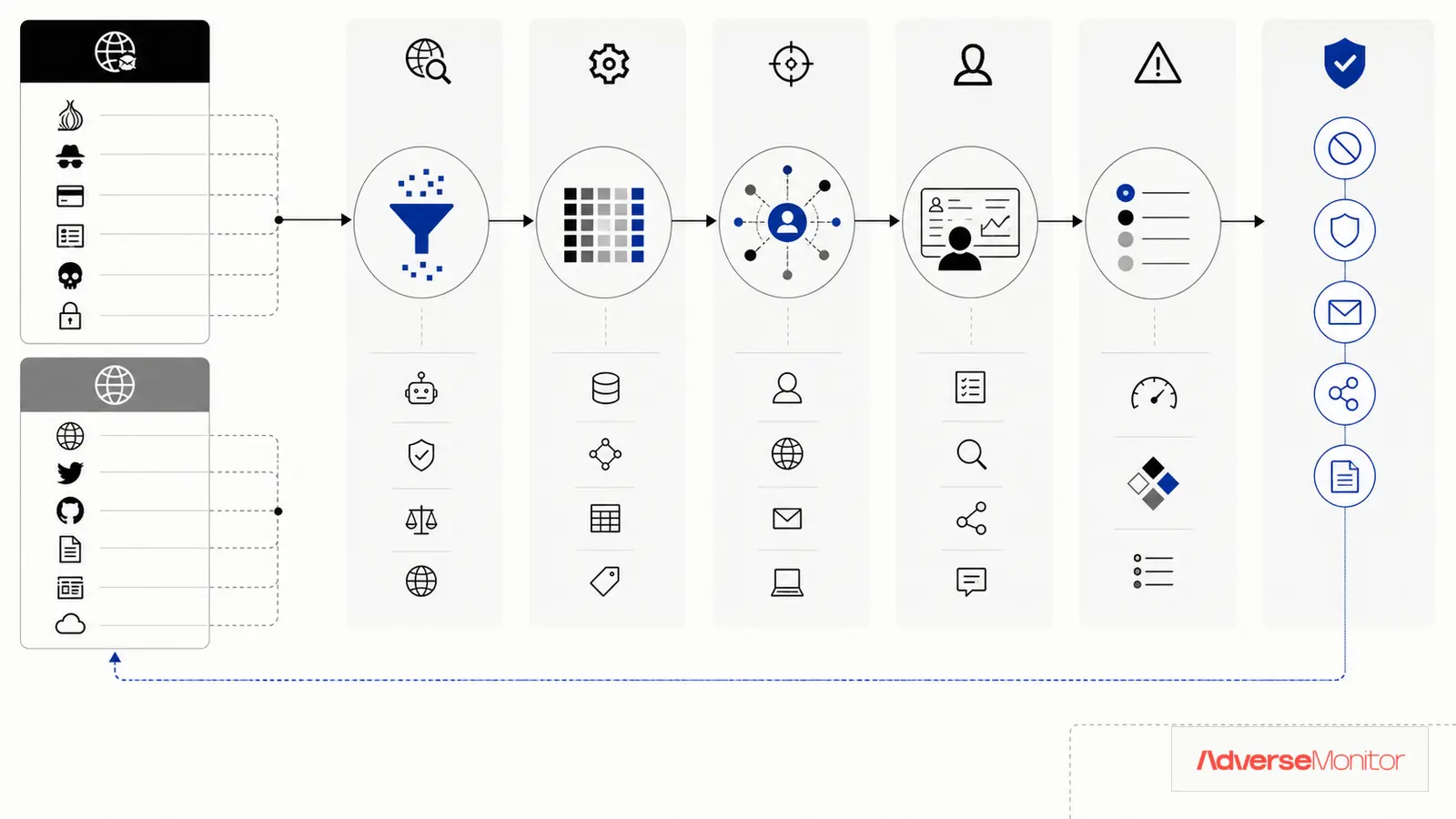
Modern dark web monitoring platforms operate through a multi-step process:
1. Collection: Monitoring platforms collect and index records from their available sources. Collection frequency, source availability, and latency vary and should be verified with each provider.
2. Keyword Matching: The system compares collected text with configured terms such as domain names, company names, or other identifiers.
3. Context Analysis: Some providers classify a match by category, named actor, or risk level. An analyst should compare that classification with the source text and internal evidence.
4. Review and Delivery: Matching records can be reviewed in a dashboard or sent through configured delivery channels. Delivery latency varies by source and destination.
5. Evidence Retention: Providers retain different fields and source material. Check whether the result includes source text, a source link, timestamps, or screenshots before relying on it for an investigation.
Speed Matters:
External-source monitoring can add an investigation lead. It does not replace identity, endpoint, network, or cloud telemetry, and it cannot establish whether an incident is contained.
What Dark Web Monitoring Can Add
Monitoring can add an external signal even when the organization has no known incident. Its value depends on whether the team can verify and act on the records it receives.
Unknown Breaches Are Common: Many organizations don't know they've been compromised until long after the fact. Dark web monitoring can reveal that your data is being traded or sold before you discover the breach through other means.
Third-Party Compromises Affect You: Even if your direct security is solid, breaches at vendors, partners, or service providers can expose your data. Monitoring helps you discover these indirect exposures.
Credential Reuse Is Dangerous: Employees often reuse passwords across personal and work accounts. If their personal credentials leak in a consumer breach, those same passwords might work on your corporate systems.
Regulatory Work: GDPR, HIPAA, and PCI DSS impose different security, investigation, and notification duties. A monitoring record may support an investigation, but buying a monitoring service does not establish compliance.
Cyber Insurance: Policy applications and controls differ by insurer. Check the policy wording before treating dark web monitoring as a required control.
Prevent Secondary Attacks: Initial compromises often lead to larger attacks. Detecting that your credentials or network access is for sale gives you time to lock down systems before ransomware operators or other attackers can strike.
What Information Should You Monitor?
Effective dark web monitoring requires strategic selection of what to track:
- Domain Names: Your primary domain and all subdomains, including those used for email, applications, and development environments
- Company Names: Your official business name and common variations, including former names or DBA designations
- Executive Names: C-level executives and other high-value targets are often specifically mentioned in threats
- Industry-Specific Terms: Keywords relevant to your sector that might indicate targeting of your industry
- Vendor/Partner Names: Organizations in your supply chain whose compromise could affect your security
- Brand Names: Product names and trademarks that might be counterfeited or abused
Traditional vs. Modern Dark Web Monitoring
Dark web monitoring is sold in different forms, from analyst-led services to self-service software and APIs. Compare source scope, evidence quality, review workload, and current published pricing.
Modern platforms have democratized access through:
- Automation: Classification and matching can help analysts prioritize records, but they do not confirm an incident
- Self-Service: Some products let a customer configure terms and review source evidence directly
- Published scope and pricing: Check the current AdverseMonitor plans and the limits attached to each tier
- Measured delivery: Compare collection-to-review time by source instead of accepting a generic real-time claim
- Simpler Interfaces: Business users can configure and manage monitoring without technical expertise
Getting Started with Dark Web Monitoring
Start with a small set of terms and a named owner for each match.
Step 1: Choose a Platform: Compare the provider's named sources, collection cadence, retained evidence, and pricing. Use a trial or domain scan to inspect real results before committing.
Step 2: Define Your Keywords: Start with domain names and the company name. Add other terms only when an owner can explain how a match will be reviewed. Provider limits vary, so check the current plan details.
Step 3: Configure Alerts: Use the delivery methods the provider supports and send matches to the team that owns verification or incident response.
Step 4: Establish Response Procedures: Determine what actions to take when different types of alerts arrive. Have a plan for credential leaks, ransomware mentions, and data breach discoveries.
Step 5: Review the Terms: Update monitored domains, company names, and owners when the organization changes.
What to Do When You Receive an Alert
Assign each alert to an owner and preserve the original record. Then follow the response steps that match the evidence.
- Assess Severity: Determine if the threat is critical (active ransomware, credential leak) or informational (industry discussion)
- Verify the Match: Confirm that the mention relates to your organization and is not a name collision or false match
- Preserve Evidence: Save screenshots and details for potential investigation or legal proceedings
- Take Immediate Action: For credential leaks, force password resets. For ransomware mentions, activate incident response procedures
- Investigate Scope: Determine how the breach occurred and what data may be affected
- Document the Decision: Record the evidence reviewed, the decision, and actions taken
Conclusion
Dark web monitoring adds records from sources that internal security tools may not collect. It works best when the organization defines monitored terms, evidence requirements, and an owner for follow-up.
Continuous dark web monitoring can provide an additional investigation signal when an organization is mentioned. Collection latency and source credibility vary, so teams should measure the workflow and verify every match against internal evidence.
Test the service with your own domain or organization name. Keep it only if the results are relevant, reviewable, and tied to a response workflow.