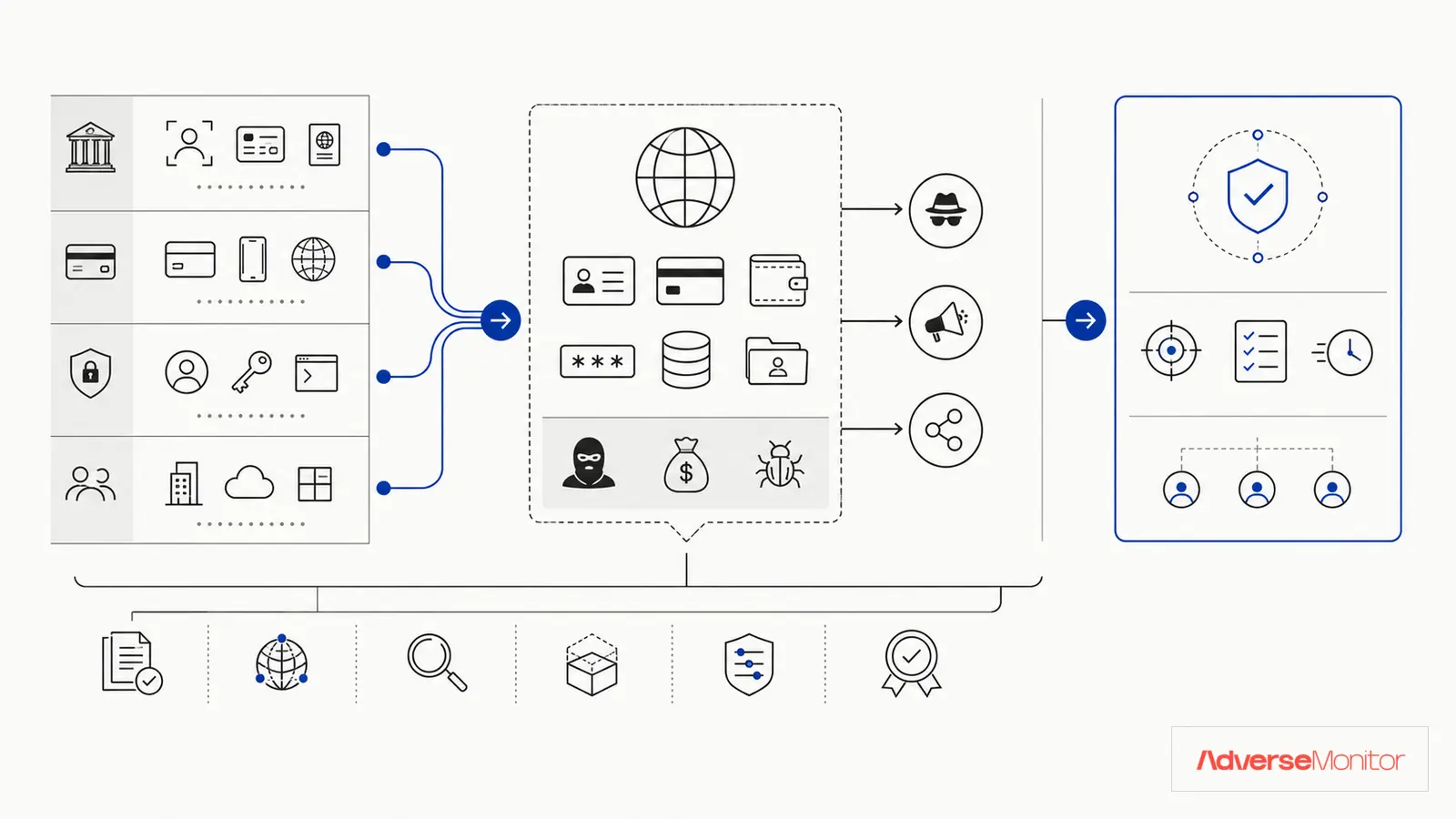
Criminal markets can monetize banking credentials, payment data, and identity records. Financial institutions also depend on vendors and APIs, so a credible external-source match may involve either the institution or a supplier.
Financial-incident costs depend on affected systems, fraud, recovery work, notification duties, and business interruption. Use a scoped internal estimate instead of a generic industry average.
Why Financial Data Attracts Criminal Activity
These factors affect the investigation and response:
- Account access can be monetized. A valid online banking credential or brokerage login may support wire fraud, ACH manipulation, or cryptocurrency theft.
- Several rules may apply. GLBA, PCI DSS, SOX, NYDFS Part 500, and DORA in the EU can create overlapping reporting and investigation duties, depending on the incident.
- The third-party attack surface is vast. Core banking platforms, payment rails, KYC vendors, and cloud infrastructure each introduce credential and API-key exposure paths outside the institution's direct control.
Four Record Types for Financial Security Teams to Evaluate
1. Compromised Corporate Credentials on Initial-Access Marketplaces
Markets such as Russian Market and 2easy have advertised credential records collected by infostealers. Treat a listing as a lead, then verify whether the account is current and whether authentication logs show use.
2. Customer Data and PII Dumps on Ransomware Leak Sites
Ransomware groups may publish claims or data tied to a financial institution or its vendor. Collection latency varies, and the named organization must be verified before the record enters a fraud or compliance process.
3. API Keys and Infrastructure Secrets
Keys can leak through source repositories, shared workspaces, or ticketing systems. Scope any verified key by its permissions, revoke it, and review access logs rather than assuming the exposure caused fraud.
4. Insider Recruitment and Bribery Solicitations
Some forum posts claim to recruit insiders for credential access, SIM swaps, or payment approval. A named-institution match should go to an owner who can verify the source and compare it with internal evidence.
Detection and Response Playbook
A financial-services team can evaluate these capabilities against its own investigation process:
- Continuous credential exposure scanning against corporate email domains, employee accounts, and customer-facing authentication systems.
- Ransomware leak-site coverage with a named source list, collection cadence, and documented gaps.
- Organization mention monitoring for the institution, subsidiaries, and relevant product names across the provider's documented sources.
- Workflow integration that maps available fields into the SIEM, SOAR, or fraud system without inventing missing values.
Compliance Tie-In
A verified record may support incident response, vendor review, or fraud investigation. The institution's legal and compliance owners decide whether it triggers a GLBA, state-law, OCC, FFIEC, or suspicious-activity workflow.
What to Do If You Find Your Data Exposed
- Preserve evidence: timestamp, source URL, actor handle, price, dataset description.
- Scope the exposure: cross-reference exposed credentials against active sessions and production data.
- Invalidate and rotate: disable verified exposed accounts and rotate affected API keys within the organization's emergency-response window.
- Ask legal counsel and the privacy owner to determine whether customer or regulatory notice is required.
- Have the compliance owner determine whether confirmed fraud meets suspicious-activity reporting requirements.
- Let the incident lead and legal counsel decide whether and how to involve law enforcement.
AdverseMonitor tracks publicly posted cyber-incident claims — ransomware and extortion leak-site posts, data-breach and data-leak listings, DDoS, defacement and initial-access offers — drawn from sources including Telegram channels, Tor sites and the open web, and raises a dashboard alert when your organisation, domain, industry or country is named. Start a free scan at adversemonitor.com/scan.